The Daily Standard
Story Archive

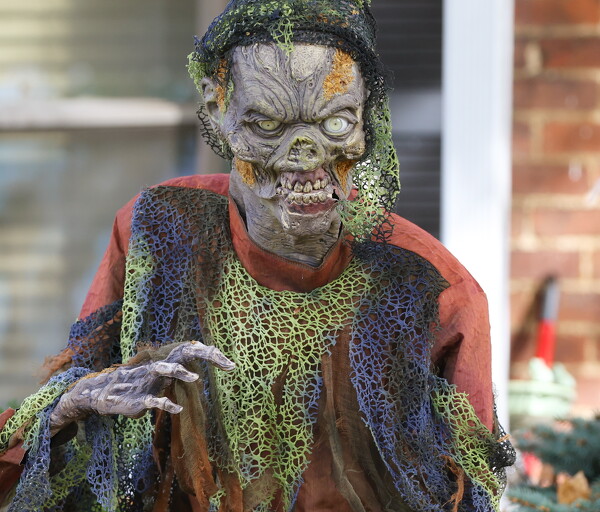
There's a gauntlet of good scares along Sugar Street in Celina, where residents have displayed witches, ghosts, zombies, skeletons, werewolves - and a creepy clown. The elaborate decorations reflect the Halloween season's fascination with fear and the fun of being frightened.
CELINA - Whether it's a door slamming, someone quickly popping out of a corner or certain kinds of phobias, like arachnophobia, claustrophobia or thanatophobia, the fear of death, being scared is a part of human biology.
Still, because all humans are different, fears can manifest themselves separately and ultimately affect how often and what type of scares people seek out.
Kate Brownlowe, an associate professor of psychiatry and neurology at the Ohio State Wexner Medical Center, is an expert on the topic, which she said often comes up more frequently this time of year.
"This time of year, there's haunted houses and people watch horror movies, so it's always kind of curious to think about why some people like to be scared or afraid and some people don't like it," she said.
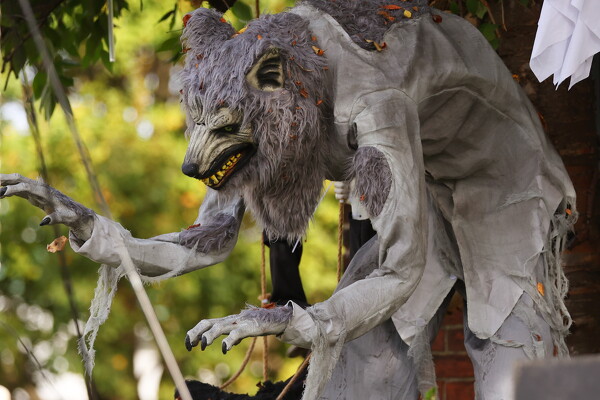
There's a gauntlet of good scares along Sugar Street in Celina, where residents have displayed witches, ghosts, zombies, skeletons, werewolves - and a creepy clown. The elaborate decorations reflect the Halloween season's fascination with fear and the fun of being frightened.
Biologically, the amygdala inside the brain is responsible for emotional processing, according to the Cleveland Clinic. It is a small, almond-shaped structure that is part of a larger network in the brain called the limbic system, which detects danger.
"Our brains, because they want to protect us, are always looking for things that might be dangerous to us," Brownlowe said. "That's really good because you want to be able to jump out of the way of a bus or if you're hiking in the woods and there's a bear, you want to be able to run away from the bear."
When the brain identifies something as potentially dangerous, it triggers the flight-or-fight system - where a person defends themselves or flees the situation.
"What's interesting about that in humans, (which) makes us obviously different from animals in a lot of ways, is that the frontal lobes in our brain are able to kind of mediate or change the body's fear detection and fear response," she said. "If we're watching a movie and there's a jump scare, the frontal lobe is still able to tell you, 'Actually, we're okay,' and that slows down the fear response. It calms down the amygdala; it kind of stops that fear signal coming from the brain. That calms down the body as well so that people aren't walking around in constant terror when somebody slams the door or drops something."
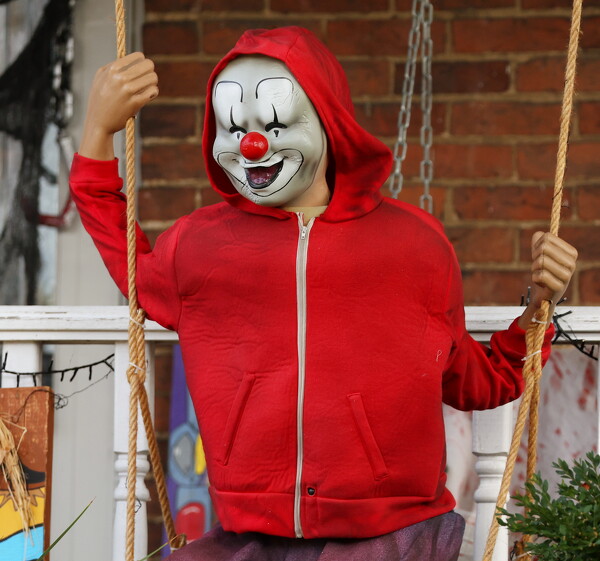
There's a gauntlet of good scares along Sugar Street in Celina, where residents have displayed witches, ghosts, zombies, skeletons, werewolves - and a creepy clown. The elaborate decorations reflect the Halloween season's fascination with fear and the fun of being frightened.
Brownlowe said that the threshold for someone being afraid differs in preference and lived experiences.
For example, if a person's parent was bitten by a dog, that person is likely to grow up being scared or cautious around dogs.
"Are you an introvert or an extrovert?" Brownlowe asked. "One of the dimensions of that is called sensation seeking, and so that is how much excitement your brain looks for. Where's the set point where thrill turns into scary? Some people's set point is really low - something that's thrilling turns scary really fast for them. Some people are genetic risk takers. They're people who skydive because they don't really feel the thrill until they have such an intense activity or they only love the most intense roller coasters because that's when they feel the most intense activity."
Brownlowe said that people who may enjoy being scared and seek it out can process it in a controlled environment where the stakes are low. For example, a horror movie can provide 90 minutes of fear, but the watcher can pause or stop the movie any time.
"When we are kind of exposed to something that's scary or fearful, but we're still in a safe place, it does kind of recalibrate your brain chemistry and allow you to be more tolerant of things that might otherwise be scary," she said. "If you went to a haunted house and you get the pants scared off of you, (then) maybe asking your boss for a raise isn't so bad. You've had that thrill, you survived it."
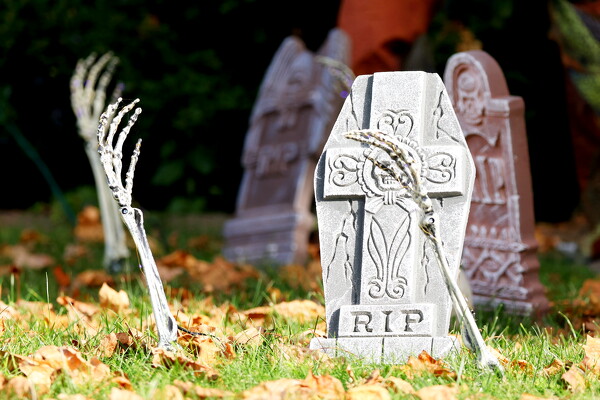
There's a gauntlet of good scares along Sugar Street in Celina, where residents have displayed witches, ghosts, zombies, skeletons, werewolves - and a creepy clown. The elaborate decorations reflect the Halloween season's fascination with fear and the fun of being frightened.
Since 2020, the Science of Scare project has measured the physiological impact horror films have on people to rank the scariest movies ever made, according to science. The experiment measures people's response to horror movies by tracking their heart rate. Each year, a team curates a list of "the most terrifying English-language horror movies and screens them to our 250-strong panel," the project's website states. Test subjects are fitted with heart rate monitors that track which movies had the highest heart rate scores. The score combines heart rate, how much the movie raised the audience's heart rate compared to the group's resting heart rate; heart rate variability, the natural variation in time between heartbeats; and peak heart rate, the highest point the audience's heart rate reached during the movie.
"Sinister" is the scientifically scariest movie of all time with a Scare Score of 96, per the results. The average resting heart rate was 64 beats per minute, the average heart rate during the film was 86 BPM, the high spike was 131 BPM, the average heart rate rise was 22 BPM and the HRV drop was 21%.
Other top performers are "Host," scare score of 95; "Skinamarink," scare score of 91; "Insidious," scare score of 90; and "The Conjuring," scare score of 88.
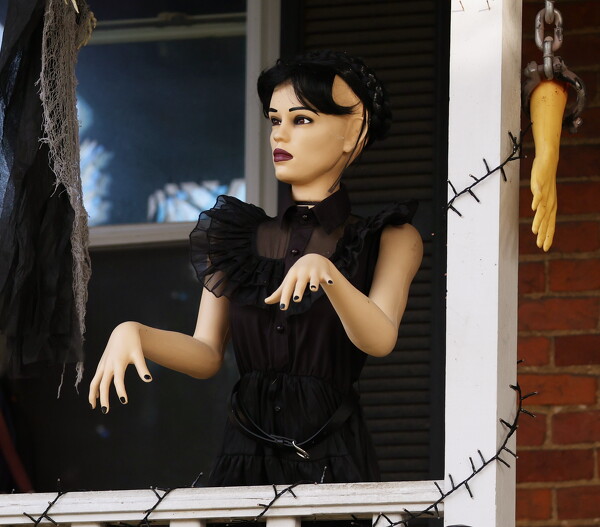
There's a gauntlet of good scares along Sugar Street in Celina, where residents have displayed witches, ghosts, zombies, skeletons, werewolves - and a creepy clown. The elaborate decorations reflect the Halloween season's fascination with fear and the fun of being frightened.
Brownlowe thinks it's interesting how certain anxieties can present themselves in culture.
"Godzilla" reflected the nuclear fears of the 1950s, and "Invasion of the Body Snatchers" mirrored the fear of others, according to the History Channel. "Rosemary's Baby" reflected the paranoia of female bodily autonomy of the 1970s, "The Ring" pointed to the early 2000s fears of evolving technology and "Get Out" reflected the racial tensions of the 2020s.
Though the topics are complex, Brownlowe said horror movies and fear can reset a person and act as a grounding exercise.
"There's so much of our lives right now that is so artificial," she said. "We're doing everything on computers and getting in our cars and driving from place to place. Having that almost primitive experience of getting scared, having your heart race, it almost brings you back into your body, brings your mindfulness and brings your focus back into your body. I think it can allow people to feel almost more connected and more integrated into their existence."
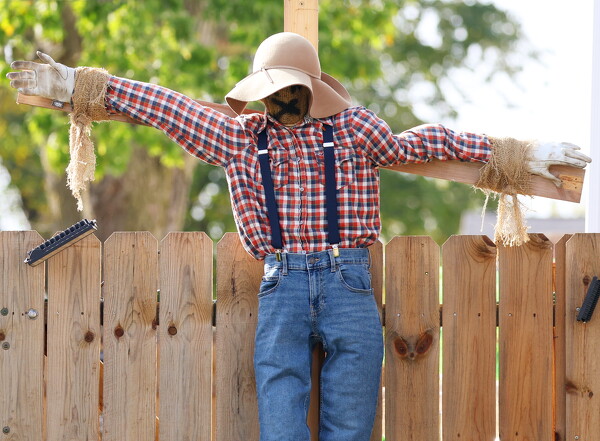
There's a gauntlet of good scares along Sugar Street in Celina, where residents have displayed witches, ghosts, zombies, skeletons, werewolves - and a creepy clown. The elaborate decorations reflect the Halloween season's fascination with fear and the fun of being frightened.